
You are using an out of date browser. It may not display this or other websites correctly.
You should upgrade or use an alternative browser.
You should upgrade or use an alternative browser.
Rear spoilers
- Thread starter SuperBuickGuy
- Start date

Help Support VetteMod Forum:

DJ Dep
refugee from the other place
has anyone done aero testing on a flat back window vette? more specifically, does the spoiler need to be above the roofline, or would a 80 up deck spoiler be as effective?
And yes, I do plan on up to 180 mph speeds.... and a sign on the back of my car that says "if this car is on a trailer, please call the police because it's being stolen"
Remove the spoiler? okay, where would you store it to get it to the track?
So you will be driving at the Dayton 500 or at Bonneville or Indy?:amazed:

Twin_Turbo
Der Maulwurf
- Joined
- Mar 5, 2008
- Messages
- 7,575
- Reaction score
- 6
180? I'm having trouble breaking 150mph w/ a 550HP supercharged GTA on the German autobahm. It's a much more aerodynamically stable car yes it does get scary at those speeds. At those speeds the rear end is the last thing you need to worry about, the front is the 1st problem, you have to keep the air out of it and from under it.

turtlevette
The Turdle
Those big wings must cost a ton of HP. I bet it slows the car down by 20 mph.

MYBAD79
Moderator
Watched the last F1 race ? In India they have a very long straight and they're allowed to open a small slotin the rear wing if they're within a second of the car ahead. The upper wing element can be rotated so it is opening a slot of aprox 3" - when they do that at 150+ mph it's like they suddenly have an additional 200hp or so ... The onboard shots are amazing , you see the white line that indicates where they can open the wing and you see the driver hit a switch on the steering wheel , then the car flies by the car ahead .... Arrodynamics are awesome ....
DJ Dep
refugee from the other place
Those big wings must cost a ton of HP. I bet it slows the car down by 20 mph.
Nope...he also has dual alternators to offset the HP drain. That way it sucks down less current so the engine actually GAINS power. Probably at least 100HP.

I wonder if DB is following this thread?:amazed:


![Pampers Sensitive Baby Wipes, Clinically Proven, Fragrance Free, Unscented, Water Based, Hypoallergenic, Multi-Use, Hand Wipes 336 Wipes Total (6X Flip-Top Packs) [Packaging May Vary]](https://m.media-amazon.com/images/I/41KLBHu9CAL._SL500_.jpg)





As an Amazon Associate we earn from qualifying purchases. Product prices and availability are accurate as of the date/time indicated and are subject to change.

68L71
Well-known member
- Joined
- May 13, 2008
- Messages
- 747
- Reaction score
- 0
has anyone done aero testing on a flat back window vette? more specifically, does the spoiler need to be above the roofline, or would a 80 up deck spoiler be as effective?
And yes, I do plan on up to 180 mph speeds.... and a sign on the back of my car that says "if this car is on a trailer, please call the police because it's being stolen"
Remove the spoiler? okay, where would you store it to get it to the track?
:lol:

69427
The Artist formerly known as Turbo84
- Joined
- Mar 30, 2008
- Messages
- 3,080
- Reaction score
- 42
- City & State/Province
- Clinging to my guns and religion in KCMO.
You have no clue how fast, or what kind of cars I've driven. (FWIW I have first hand experience with the aero/handling difference between a non-winged and a winged sprint car. Night and day difference.) And there's no maybe about aero. It's physics and there's no formula that has a velocity constant stating there's noticeable aero effects above that speed, and unnoticeable aero effects below that speed.
Two can play the ******* game here Howard, and I've had plenty of caffeine this afternoon. If you want to talk facts, physics, or engineering, I'm all ears. Or if you prefer to play the game, I'm here too.[/QUOTE]
a winged sprint car weights how much? has tires how wide? has what 850-900hp? and a wing on top the size of a roof and you want to compare that to a Corvette? which is the apple and which the orange?[/QUOTE]
Apples and oranges, huh?
On a road trip today I saw dozens of eighteen wheelers with multiple aero devices. Overcab wind deflectors, tractor side skirts, and even skirts on the trailers. Does anyone here disagree that these trucks are significantly slower than the speeds several of us push our Corvettes on the track? Perhaps another comparison: A Corvette weighs what (compared to an eighteen wheeler)? How wide are Corvette tires (compared to an 18 wheeler's tires)? How much horsepower does a Z06, ZR1, or my ZL1 have (compared to an 18 wheeler)?
And these comparisons mean what? The answer: Absolutely nothing. Air doesn't give a rat's ass how much horsepower a vehicle has. It also doesn't care how much the vehicle weighs or how much tire is on the vehicle.
Air only cares about coefficient of drag (or lift), frontal (or airfoil) area, and velocity.
Apples. Oranges. Lemons.
Two can play the ******* game here Howard, and I've had plenty of caffeine this afternoon. If you want to talk facts, physics, or engineering, I'm all ears. Or if you prefer to play the game, I'm here too.[/QUOTE]
a winged sprint car weights how much? has tires how wide? has what 850-900hp? and a wing on top the size of a roof and you want to compare that to a Corvette? which is the apple and which the orange?[/QUOTE]
Apples and oranges, huh?
On a road trip today I saw dozens of eighteen wheelers with multiple aero devices. Overcab wind deflectors, tractor side skirts, and even skirts on the trailers. Does anyone here disagree that these trucks are significantly slower than the speeds several of us push our Corvettes on the track? Perhaps another comparison: A Corvette weighs what (compared to an eighteen wheeler)? How wide are Corvette tires (compared to an 18 wheeler's tires)? How much horsepower does a Z06, ZR1, or my ZL1 have (compared to an 18 wheeler)?
And these comparisons mean what? The answer: Absolutely nothing. Air doesn't give a rat's ass how much horsepower a vehicle has. It also doesn't care how much the vehicle weighs or how much tire is on the vehicle.
Air only cares about coefficient of drag (or lift), frontal (or airfoil) area, and velocity.
Apples. Oranges. Lemons.
69427
The Artist formerly known as Turbo84
- Joined
- Mar 30, 2008
- Messages
- 3,080
- Reaction score
- 42
- City & State/Province
- Clinging to my guns and religion in KCMO.
It`s doubtful in my mind that that silver thing goes fast enough to need all those ricer bolt on`s, ..............
I disagree. There is no speed threshold where aero suddenly "kicks in".
It's called a knee point on a non-linear function. Even a half assed engineer knows that.
Nonsense.
Give me some facts or data, not some smartass post.
turtlevette
The Turdle

here's a graph i found. I would have thought the slope would have been greater. Its a squared function.
at 60 mph (100 km/hr) it shows 100 Newtons or about 22 pounds downforce. That's pretty insignificant.
at 120 mph (200km/hr) it shows 380Newtons or about 80 pounds downforce. Nothing to write home about.
The formula for downforce of a wing is given by:

Where:
D is downforce in newtons
WS is wingspan in metres
H is height in metres
AoA is angle of attack
F is drag coefficient
ρ is air density in kg/m³
V is velocity in m/s
Last edited:

redvetracr
Well-known member
[/QUOTE]
Apples and oranges, huh?
On a road trip today I saw dozens of eighteen wheelers with multiple aero devices. Overcab wind deflectors, tractor side skirts, and even skirts on the trailers. Does anyone here disagree that these trucks are significantly slower than the speeds several of us push our Corvettes on the track? Perhaps another comparison: A Corvette weighs what (compared to an eighteen wheeler)? How wide are Corvette tires (compared to an 18 wheeler's tires)? How much horsepower does a Z06, ZR1, or my ZL1 have (compared to an 18 wheeler)?
And these comparisons mean what? The answer: Absolutely nothing. Air doesn't give a rat's ass how much horsepower a vehicle has. It also doesn't care how much the vehicle weighs or how much tire is on the vehicle.
Air only cares about coefficient of drag (or lift), frontal (or airfoil) area, and velocity.
Apples. Oranges. Lemons.[/QUOTE]
I see so what your saying is that great big wing on the roof of a winged sprint car is there to make the sprinter more aerodynamic but the side skirts on a semi trailer are there for downforce? I can`t wait to see your car with it`s World of Outlaws hydraulic roof wing, and please let us know how much it reduces your lap times...and when you win your first race in the Corvette...
Apples and oranges, huh?
On a road trip today I saw dozens of eighteen wheelers with multiple aero devices. Overcab wind deflectors, tractor side skirts, and even skirts on the trailers. Does anyone here disagree that these trucks are significantly slower than the speeds several of us push our Corvettes on the track? Perhaps another comparison: A Corvette weighs what (compared to an eighteen wheeler)? How wide are Corvette tires (compared to an 18 wheeler's tires)? How much horsepower does a Z06, ZR1, or my ZL1 have (compared to an 18 wheeler)?
And these comparisons mean what? The answer: Absolutely nothing. Air doesn't give a rat's ass how much horsepower a vehicle has. It also doesn't care how much the vehicle weighs or how much tire is on the vehicle.
Air only cares about coefficient of drag (or lift), frontal (or airfoil) area, and velocity.
Apples. Oranges. Lemons.[/QUOTE]
I see so what your saying is that great big wing on the roof of a winged sprint car is there to make the sprinter more aerodynamic but the side skirts on a semi trailer are there for downforce? I can`t wait to see your car with it`s World of Outlaws hydraulic roof wing, and please let us know how much it reduces your lap times...and when you win your first race in the Corvette...
redvetracr
Well-known member
You have no clue how fast, or what kind of cars I've driven. (FWIW I have first hand experience with the aero/handling difference between a non-winged and a winged sprint car.
.
please do enlighten us of your vast racing experience...

SuperBuickGuy
Well-known member
here's a graph i found. I would have thought the slope would have been greater. Its a squared function.
at 60 mph (100 km/hr) it shows 100 Newtons or about 22 pounds downforce. That's pretty insignificant.
at 120 mph (200km/hr) it shows 380Newtons or about 80 pounds downforce. Nothing to write home about.
The formula for downforce of a wing is given by:
Where:
D is downforce in newtons
WS is wingspan in metres
H is height in metres
AoA is angle of attack
F is drag coefficient
ρ is air density in kg/m³
V is velocity in m/s
and suddenly, out of the rainstorm of pissing matches; solid information... thanks turtle :thumbs:
DJ Dep
refugee from the other place
I heard if you mount a slide rule on the roof, you get tons of downforce. Of course, it depends on the angle of deflection and the length and width of the slide rule. But at least they are adjustable. 

phantomjock
Well-known member
Back to the issue at hand...
What about a high mounted rear foil on a C3?
I offer the following:
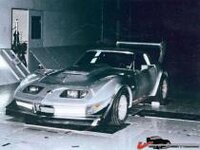
This image was lifted from a VetteWeb article on 1980s Kevlar bodys for Greg Picket. This particular image was identified as being one of, "A wide variety of "aero" devices were evaluated in order to determine the optimum shape for the 1980 race car. Courtesy of Dr. Kevin Cooper, NRC."
It appears not to be fastback (mirrors don't look right, not a 78 escutchion - so maybe a 76?) - so if it is a 'notch-back - it answers the original postings.
Unfortunately I find no details (lift/drag/downforce/velocity/etc)- but what you see. Kevin Cooper has done a lot of research in aero devices, he is an award winner at SAE, and has worked on "near surface (ground) flow." Most recent work appears to be in the area of rear diffusers.
Nice splitter too.
Cheers - Jim
What about a high mounted rear foil on a C3?
I offer the following:
This image was lifted from a VetteWeb article on 1980s Kevlar bodys for Greg Picket. This particular image was identified as being one of, "A wide variety of "aero" devices were evaluated in order to determine the optimum shape for the 1980 race car. Courtesy of Dr. Kevin Cooper, NRC."
It appears not to be fastback (mirrors don't look right, not a 78 escutchion - so maybe a 76?) - so if it is a 'notch-back - it answers the original postings.
Unfortunately I find no details (lift/drag/downforce/velocity/etc)- but what you see. Kevin Cooper has done a lot of research in aero devices, he is an award winner at SAE, and has worked on "near surface (ground) flow." Most recent work appears to be in the area of rear diffusers.
Nice splitter too.
Cheers - Jim

It`s doubtful in my mind that that silver thing goes fast enough to need all those ricer bolt on`s, ..............
I disagree. There is no speed threshold where aero suddenly "kicks in".
It's called a knee point on a non-linear function. Even a half assed engineer knows that.
Nonsense.
Give me some facts or data, not some smartass post.
This chart shows that aero doesn't "kick in" (also shows who the half assed engineer is).
GT Machine?
What about to the luggage rack? I used to be all turned on w/Pro Touring.
What happened to the Touring part? How long would you want to drive a
750 hp race car that does everything better than a stk w/o trunk or rack. At the expense of comfort and damm the cost!
I called my car semi-pro touring, now I'm thinking of the older Grand Touring
cars a model.
Anyway, what about a 8-10 in spoiler set at about 60* from vert?
I'm waiting for some enterprising member to do some testing w/spoiler
extension and yarn.
I think that getting downforce in the rear w/o massive drag will be more difficult that in front. I noticed that I have a few things hanging under the car, looks like the heater core hose is a bit low.
R
What about to the luggage rack? I used to be all turned on w/Pro Touring.
What happened to the Touring part? How long would you want to drive a
750 hp race car that does everything better than a stk w/o trunk or rack. At the expense of comfort and damm the cost!
I called my car semi-pro touring, now I'm thinking of the older Grand Touring
cars a model.
Anyway, what about a 8-10 in spoiler set at about 60* from vert?
I'm waiting for some enterprising member to do some testing w/spoiler
extension and yarn.
I think that getting downforce in the rear w/o massive drag will be more difficult that in front. I noticed that I have a few things hanging under the car, looks like the heater core hose is a bit low.
R
SuperBuickGuy
Well-known member
What about to the luggage rack? I used to be all turned on w/Pro Touring.
What happened to the Touring part? How long would you want to drive a
750 hp race car that does everything better than a stk w/o trunk or rack. At the expense of comfort and damm the cost!
I called my car semi-pro touring, now I'm thinking of the older Grand Touring
cars a model.
Anyway, what about a 8-10 in spoiler set at about 60* from vert?
I'm waiting for some enterprising member to do some testing w/spoiler
extension and yarn.
I think that getting downforce in the rear w/o massive drag will be more difficult that in front. I noticed that I have a few things hanging under the car, looks like the heater core hose is a bit low.
R
I hate reinventing the wheel, but it appears my research (read, I googled) prior to posting concludes that no one has shared their actual data on rear spoilers... sounds like it's time for tape, yarn, my gopro, the tank installed in my car and a day without precipitation.
I'll work on snapping that 180 picture (lol). (troll answer - on) No one said I was going 180, the implication was I'm designing for that point.... (troll answers - off)
and one more thing: lol
This car is a fun car that autocrosses, does open track days, and gets driven a lot. If I can avoid a radar arch (spoiler), I will; however, if I do have one on the car it will be because it needs it to overcome what I presume is a pretty substantial low-pressure area behind the rear window.
Last edited:
Research!
SBG: Someone on CF has done some yarn testing. I believe it was to do some Mythbuster type testing on a hood/windshield. They were trying to prove or dis the low pressure area at the base of the windshield being of benifit to performance.
The evidence was interesting, but by no means conclusive.
If your testing can really prove the wing is significantly better for downforce w/o big increase in cda, I'm happy to consider it.
I'm waiting for George to jump in.
R
SBG: Someone on CF has done some yarn testing. I believe it was to do some Mythbuster type testing on a hood/windshield. They were trying to prove or dis the low pressure area at the base of the windshield being of benifit to performance.
The evidence was interesting, but by no means conclusive.
If your testing can really prove the wing is significantly better for downforce w/o big increase in cda, I'm happy to consider it.
I'm waiting for George to jump in.
R
phantomjock
Well-known member
Class is in Session
Testing is always useful.
Gene has done some tuft testing as I recall, and another member was working testing on velocity change through a radiator.
Another approach; base a design on sound theory, set out a hypothesis, and then do some experimentation. Analyze results and repeat as necessary. (I'm sure someone can Google that series of steps and point out a few missed steps - BFD, you'll get the idea.)
If you are interested in some theory, I'll offer the following invaluable texts for low speed aerodynamics, theory and application - depending on the text:
Ing S.F. Hoerner - Fluid Dynamic Drag, and the companion book Fluid Dynamic Lift. Abbot and Doenhoff, Theory of Wing Sections; Geoffrey Howard, Automobile Aerodynamics; a translated Japanese text published by Car Styling, Automotive Aerodynamics, SAE Papers - Vehicle Aerodynamics (a collection of papers), New Directions in Race Car Aerodynamics: Designing for Speed by Joseph Katz, and Simon MacBeath, Competition Car Downforce: A Practical Handbook. These are all part of my growing Low Speed/Aero Library. I'm going to post a section from Simon MacBeath's Competition Car Downforce in the downloads - for those interested. It's a nice piece and useful for some of what you're looking for - if I read and understand your stated needs correctly.
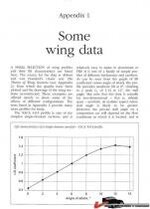
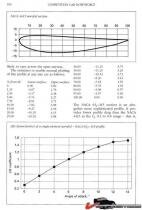
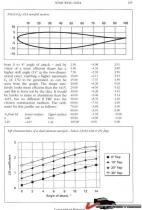
Hopefully you'll find it interesting. It is a pdf and requires TT or BBShark to upload - so it will be a bit. Meanwhile, I offer a few jpgs of the appendix on WINGS (the correct name is WINGS, after all - spoilers are there to KILL lift! -- these WINGS just generate lift DOWN.):
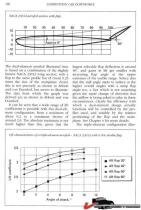
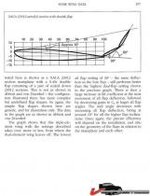
Another approach you see more these days is the Cellular Wing -- witness the posted A-Mod Autocross/Hillclimb car (which is so cool I want to build one next.) I did MS work using Cellular Wing Theory it and a presentation at AIAA regionals - back in the very early 70s. It was also a key to our Uni study for a Man Powered Aircraft. No, we didn't build it - but would have been a player! McCreedy had the funds - we were poor students - and could only afford to build a HG instead - 50 bucks - and it flew.
Hope you enjoy.
Cheers - Jim
Class adjourned.
Testing is always useful.
Gene has done some tuft testing as I recall, and another member was working testing on velocity change through a radiator.
Another approach; base a design on sound theory, set out a hypothesis, and then do some experimentation. Analyze results and repeat as necessary. (I'm sure someone can Google that series of steps and point out a few missed steps - BFD, you'll get the idea.)
If you are interested in some theory, I'll offer the following invaluable texts for low speed aerodynamics, theory and application - depending on the text:
Ing S.F. Hoerner - Fluid Dynamic Drag, and the companion book Fluid Dynamic Lift. Abbot and Doenhoff, Theory of Wing Sections; Geoffrey Howard, Automobile Aerodynamics; a translated Japanese text published by Car Styling, Automotive Aerodynamics, SAE Papers - Vehicle Aerodynamics (a collection of papers), New Directions in Race Car Aerodynamics: Designing for Speed by Joseph Katz, and Simon MacBeath, Competition Car Downforce: A Practical Handbook. These are all part of my growing Low Speed/Aero Library. I'm going to post a section from Simon MacBeath's Competition Car Downforce in the downloads - for those interested. It's a nice piece and useful for some of what you're looking for - if I read and understand your stated needs correctly.
Hopefully you'll find it interesting. It is a pdf and requires TT or BBShark to upload - so it will be a bit. Meanwhile, I offer a few jpgs of the appendix on WINGS (the correct name is WINGS, after all - spoilers are there to KILL lift! -- these WINGS just generate lift DOWN.):
Another approach you see more these days is the Cellular Wing -- witness the posted A-Mod Autocross/Hillclimb car (which is so cool I want to build one next.) I did MS work using Cellular Wing Theory it and a presentation at AIAA regionals - back in the very early 70s. It was also a key to our Uni study for a Man Powered Aircraft. No, we didn't build it - but would have been a player! McCreedy had the funds - we were poor students - and could only afford to build a HG instead - 50 bucks - and it flew.
Hope you enjoy.
Cheers - Jim
Class adjourned.
Last edited:
Way out of my depth.
A I recall, race car suspension travel had to be changed to take advantage of the improved aeros. Too much travel would upset the wings "angle of attack" I believe that is something close to the correct term.
Reducing suspension travel on my car is something I do not want to do.
I keep hoping that proper spindles will magically appear soon!
Many people have run 17-18 wheels to get a stance that hopefully improves stability.
R
A I recall, race car suspension travel had to be changed to take advantage of the improved aeros. Too much travel would upset the wings "angle of attack" I believe that is something close to the correct term.
Reducing suspension travel on my car is something I do not want to do.
I keep hoping that proper spindles will magically appear soon!
Many people have run 17-18 wheels to get a stance that hopefully improves stability.
R
69427
The Artist formerly known as Turbo84
- Joined
- Mar 30, 2008
- Messages
- 3,080
- Reaction score
- 42
- City & State/Province
- Clinging to my guns and religion in KCMO.
here's a graph i found. I would have thought the slope would have been greater. Its a squared function..............
Welcome to the real world, Turd. We've been waiting for you.
69427
The Artist formerly known as Turbo84
- Joined
- Mar 30, 2008
- Messages
- 3,080
- Reaction score
- 42
- City & State/Province
- Clinging to my guns and religion in KCMO.
Apples and oranges, huh?
On a road trip today I saw dozens of eighteen wheelers with multiple aero devices. Overcab wind deflectors, tractor side skirts, and even skirts on the trailers. Does anyone here disagree that these trucks are significantly slower than the speeds several of us push our Corvettes on the track? Perhaps another comparison: A Corvette weighs what (compared to an eighteen wheeler)? How wide are Corvette tires (compared to an 18 wheeler's tires)? How much horsepower does a Z06, ZR1, or my ZL1 have (compared to an 18 wheeler)?
And these comparisons mean what? The answer: Absolutely nothing. Air doesn't give a rat's ass how much horsepower a vehicle has. It also doesn't care how much the vehicle weighs or how much tire is on the vehicle.
Air only cares about coefficient of drag (or lift), frontal (or airfoil) area, and velocity.
Apples. Oranges. Lemons.[/QUOTE]
I see so what your saying is that great big wing on the roof of a winged sprint car is there to make the sprinter more aerodynamic but the side skirts on a semi trailer are there for downforce? I can`t wait to see your car with it`s World of Outlaws hydraulic roof wing, and please let us know how much it reduces your lap times...and when you win your first race in the Corvette...[/QUOTE]
Damn, Howard, do I gotta explain everything at an eighth grade level to you too?
Let's try it again. I was using a few examples of vehicles with aero add-ons to show that a vehicle does not have to be over 150 mph to feel the effects of the air. Eighteen wheelers at 65 mph gain fuel efficiency by using aero mods to reduce drag. (Is that clear?) Winged sprint cars, when running on quarter mile tracks probably peak out at 80 or 85 miles an hour. Plenty of aero downforce at those lowly speeds. (True?)
My point from the start has been that it is pure nonsense to claim that a vehicle (or wing) is immune to aero drag or lift until it is well over a hundred miles an hour. I've piloted airplanes that will leave the ground well below 100 miles per hour. For gosh sakes, look at a damn Prius. Does that thing look like a brick, or something that might have spent a moment or two in a wind tunnel?
Aero effects (drag and lift) occur at all speeds and affect all vehicles (even that silver Corvette you disparaged). What part of this concept are you still unclear about?
On a road trip today I saw dozens of eighteen wheelers with multiple aero devices. Overcab wind deflectors, tractor side skirts, and even skirts on the trailers. Does anyone here disagree that these trucks are significantly slower than the speeds several of us push our Corvettes on the track? Perhaps another comparison: A Corvette weighs what (compared to an eighteen wheeler)? How wide are Corvette tires (compared to an 18 wheeler's tires)? How much horsepower does a Z06, ZR1, or my ZL1 have (compared to an 18 wheeler)?
And these comparisons mean what? The answer: Absolutely nothing. Air doesn't give a rat's ass how much horsepower a vehicle has. It also doesn't care how much the vehicle weighs or how much tire is on the vehicle.
Air only cares about coefficient of drag (or lift), frontal (or airfoil) area, and velocity.
Apples. Oranges. Lemons.[/QUOTE]
I see so what your saying is that great big wing on the roof of a winged sprint car is there to make the sprinter more aerodynamic but the side skirts on a semi trailer are there for downforce? I can`t wait to see your car with it`s World of Outlaws hydraulic roof wing, and please let us know how much it reduces your lap times...and when you win your first race in the Corvette...[/QUOTE]
Damn, Howard, do I gotta explain everything at an eighth grade level to you too?
Let's try it again. I was using a few examples of vehicles with aero add-ons to show that a vehicle does not have to be over 150 mph to feel the effects of the air. Eighteen wheelers at 65 mph gain fuel efficiency by using aero mods to reduce drag. (Is that clear?) Winged sprint cars, when running on quarter mile tracks probably peak out at 80 or 85 miles an hour. Plenty of aero downforce at those lowly speeds. (True?)
My point from the start has been that it is pure nonsense to claim that a vehicle (or wing) is immune to aero drag or lift until it is well over a hundred miles an hour. I've piloted airplanes that will leave the ground well below 100 miles per hour. For gosh sakes, look at a damn Prius. Does that thing look like a brick, or something that might have spent a moment or two in a wind tunnel?
Aero effects (drag and lift) occur at all speeds and affect all vehicles (even that silver Corvette you disparaged). What part of this concept are you still unclear about?
redvetracr
Well-known member
I think WC fields had you in mind when he said this,
"If you can`t dazzle them with your brilliance baffle them with your ********"
"If you can`t dazzle them with your brilliance baffle them with your ********"
MYBAD79
Moderator
My point from the start has been that it is pure nonsense to claim that a vehicle (or wing) is immune to aero drag or lift until it is well over a hundred miles an hour. I've piloted airplanes that will leave the ground well below 100 miles per hour.
just hold your hand out the window at 70mph and voila: there's the answer.....
SuperBuickGuy
Well-known member
Testing is always useful.
Gene has done some tuft testing as I recall, and another member was working testing on velocity change through a radiator.
Another approach; base a design on sound theory, set out a hypothesis, and then do some experimentation. Analyze results and repeat as necessary. (I'm sure someone can Google that series of steps and point out a few missed steps - BFD, you'll get the idea.)
If you are interested in some theory, I'll offer the following invaluable texts for low speed aerodynamics, theory and application - depending on the text:
Ing S.F. Hoerner - Fluid Dynamic Drag, and the companion book Fluid Dynamic Lift. Abbot and Doenhoff, Theory of Wing Sections; Geoffrey Howard, Automobile Aerodynamics; a translated Japanese text published by Car Styling, Automotive Aerodynamics, SAE Papers - Vehicle Aerodynamics (a collection of papers), New Directions in Race Car Aerodynamics: Designing for Speed by Joseph Katz, and Simon MacBeath, Competition Car Downforce: A Practical Handbook. These are all part of my growing Low Speed/Aero Library. I'm going to post a section from Simon MacBeath's Competition Car Downforce in the downloads - for those interested. It's a nice piece and useful for some of what you're looking for - if I read and understand your stated needs correctly.
Hopefully you'll find it interesting. It is a pdf and requires TT or BBShark to upload - so it will be a bit. Meanwhile, I offer a few jpgs of the appendix on WINGS (the correct name is WINGS, after all - spoilers are there to KILL lift! -- these WINGS just generate lift DOWN.):
Another approach you see more these days is the Cellular Wing -- witness the posted A-Mod Autocross/Hillclimb car (which is so cool I want to build one next.) I did MS work using Cellular Wing Theory it and a presentation at AIAA regionals - back in the very early 70s. It was also a key to our Uni study for a Man Powered Aircraft. No, we didn't build it - but would have been a player! McCreedy had the funds - we were poor students - and could only afford to build a HG instead - 50 bucks - and it flew.
Hope you enjoy.
Cheers - Jim
Class adjourned.
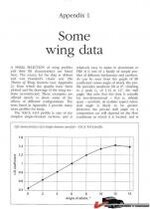
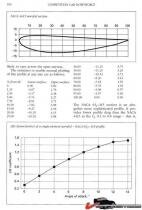
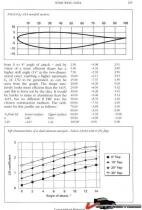
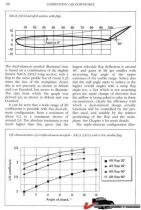
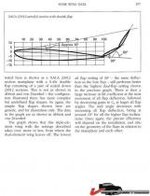
I have either the 1st or 2nd of those books - and now a friend has it and has been working through it.
and I think you just answered one of my questions "why not simply slap a later 80 up spoiler on the back?" let's see if I'm getting this, it wouldn't work because the airflow prior to the flap hasn't been (I know this is the wrong word, but don't know the right one) conditioned prior to hitting the flap to provide downforce... on an 80 up vette the window would act as the foil surface prior to the flap....
phantomjock
Well-known member
LOL! I like you choice of words there - "Properly Conditioned!" It's added to my vocabulary - very useful - thanks.
The Gurney Flap is another approach and it takes advantage of just that. WRT the rear wings of the 78 Pace Car and the 80s -up lip, there is some prior conditioning as the fast back allows the flow to be a bit more uniform than a notch back. I've got a few pages on the Gurney flap I'll drop in later.
Cheers - Jim
BTW - if you have any of the Sig Hoerner books - they are GOLD - try and find one for less than a couple of hundred bucks. And a great collection to just browse through.
Cheers - Jim
The Gurney Flap is another approach and it takes advantage of just that. WRT the rear wings of the 78 Pace Car and the 80s -up lip, there is some prior conditioning as the fast back allows the flow to be a bit more uniform than a notch back. I've got a few pages on the Gurney flap I'll drop in later.
Cheers - Jim
BTW - if you have any of the Sig Hoerner books - they are GOLD - try and find one for less than a couple of hundred bucks. And a great collection to just browse through.
Cheers - Jim

rtj
Well-known member
- Joined
- Nov 5, 2011
- Messages
- 3,598
- Reaction score
- 211
The wing is made for Porsche 911 GT-2, it gives reasonable downforce.
The suspension consists of a complete set from VB&P with bilstein shocks extremes at the rear. Dual mount rear spring, no rear sway bar!
Jeep steering Box.
12Bolt Internals 4,11:1 and 4"Halfshafts
Brakes are Wilwood W6A Radial mount with 14"x1,25" Gt rotors at all four corners. There is also Wilwood setup for the Balancebar and Cluch.
Transmission is Autogear M22X with Tilton Magnesium Bellhousing and TIlton tripple plate 7.25" hydraulic cluch.
358 Engine Consist of Rodeck Aluminum Block 4,130 bore , Bryant crank 3,34 stroke, H-Beam rods, 13,5:1 Je pistons, GM 18 degree 364 heads Ti valves, Comp Special Grind 305 311 Duration@ 0.020 and 0.732 0,692 lift With Jesel 1,85 175 Rockers, Verdi 4 stage drysump and jesel beltdrive. 550 wheel horsepower on Mustang MD 1100 Chassis Dyno, 500 lb/ft on flywheel in engine dyno.
In my last race i was a tad quicker than a 996 GT3 Super Cup on Michelin Slicks. I was on Hoosier P-Metric.
This what the owner of the grey car posted years ago.

mrvette
Phantom of the Opera
My only effort EVER at any yarn test was done due to a conversation concerning my open BB scoop on my '72 and the lack of a hood gasket in the rear, so I taped a few pieces of yarn over the back/rear opening which is several inches forward of the rear hood edge......and went for a drive up to 100 mph, no significant yard movement....not sucking into the openings, and certainly not blowing out indicating LIFT from under the hood,
now that hood WILL lift super quickly off the car at about 30 mph, and please don't ask how I know this......:suicide: all the up force is forward of the radiator support in that triangle, just like all that air pushing through the radiator, it's being compressed in front, which necessarily created lift in that area.....if anyone curious, go to my sites below, where a couple shot of the front end are shown, an you note the whole front end is opened up for breathing.....I noted the removal of front tag crap from up north, greatly aided the freeway summer cooling here in 130f road temp FLORIDA.....
:lol:
now that hood WILL lift super quickly off the car at about 30 mph, and please don't ask how I know this......:suicide: all the up force is forward of the radiator support in that triangle, just like all that air pushing through the radiator, it's being compressed in front, which necessarily created lift in that area.....if anyone curious, go to my sites below, where a couple shot of the front end are shown, an you note the whole front end is opened up for breathing.....I noted the removal of front tag crap from up north, greatly aided the freeway summer cooling here in 130f road temp FLORIDA.....
:lol:
69427
The Artist formerly known as Turbo84
- Joined
- Mar 30, 2008
- Messages
- 3,080
- Reaction score
- 42
- City & State/Province
- Clinging to my guns and religion in KCMO.
I think WC fields had you in mind when he said this,
"If you can`t dazzle them with your brilliance baffle them with your ********"
Just basic engineering and physics.
Sorry if you're having difficulty understanding these things.
Similar threads


- Replies
- 77
- Views
- 91K


- Replies
- 20
- Views
- 18K


