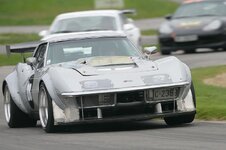
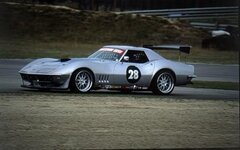
I've been interested in doing a couple subtle aero experiments on my antique. Most of the tracks I have the opportunity to run on are short/tight enough that my peak speeds are probably only about 130 mph, so aero drag issues aren't all that important to me. I'm generally happy to put up with a bit of extra aero drag if I can get some reduced lift (or added downforce if I get lucky). I've mentioned before (somewhere) that I'd like to install some minor hardware on the cowl area to cause air to stagnate (My understanding is that this is the more correct word) right in front of the windshield. While this will certainly increase drag (but come in handy in the braking zones), the added pressure in that area should add downforce in the center of the car (on both axles hopefully), and the extra air pressure should help feed the L88 airbox and engine, slightly helping to offset the extra drag. But so far, I haven't had time to come up with a design of this "piece" that would be reasonably inconspicuous on the car.
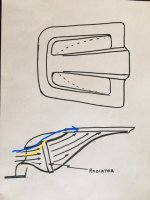
The second item, which may not work in conjunction with the above piece (due to the effective increase in frontal area from the stagnant air mass at the front of the windshield), is a vertical strip of aluminum or Lexan at the rear of the t-tops, forming a wickerbill. While this worsens the already poor airflow over the rear of an early C3, this increased pressure/force at the wickerbill would be between the axles, and hopefully reasonably negligible in the moment arm trying to lift the front axle.
I always like data, and I've got a low pressure gauge that should be able to read these small pressure changes in the event I get a chance to try these experiments.
69427 -
I appreciate the chance to offer a few ideas on your plan. While I don't as of yet have a "up-and-running" 'vette - I soon will, and these aero questions are always welcome diversions and considerations for my build.
No doubt this is your concern:
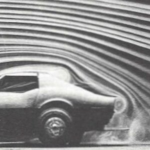
The gurney should be helpful in providing some additional downforce at the expense of some drag. Any downforce would be over the rear end and help eliminate any nose lift that might come from a wing further aft. Potentially a net gain, as you might be able to run a smaller splitter.
A problem with the Corvette (and most vehicles) is the roof often has a "roll-off" to each side. This is a styling issue and one that is less than helpful with regard to aero. This roll-off, can cause the flow to spill outwards (though not always due to the a-pillar vortex). Any loss of flow would reduce the efficiency of your installed device whether a Gurney - or wing. On a swept wing aircraft, the same thing happens, called span-wise flow. Span-wise flow decreases the overall lift. You could use an approach found on aircraft wing to A device to help increase the gurney efficiency. These would be fences - or strakes. would be attached to the roof. If you look at JPhil's pics :
https://www.vettemod.com/threads/jphil-c3-aero.11847/
You'll note some slight air flow off at the edge of the roofline, but even more with the windows open. If nothing else, the fences are easily installed with 3m tape and removed - as could be the Gurney.
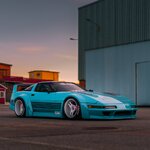
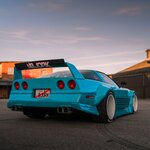
These have been used before on a C3 coupe (during the Silver State Race a few years back):
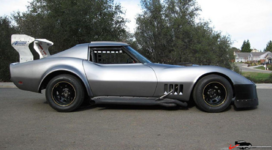
I imagine the roll-off might be increase with the side windows open, as I imagine you are required when racing. I know SCCA does.
I have recently been researching this flow issue and as an adjunct, you could attach some similar strakes to the A-Pillars (clear lexan) to help the flow and simultaneously increase the pressure at the base of the windscreen. These should be sealed at the pillar for maximum effect.

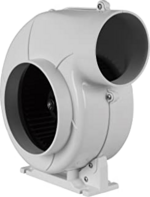
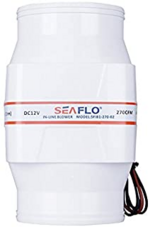
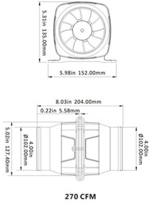
I previously have suggested that adding air to the rear deck could be very beneficial. I din't know the construction of pre 78 C3s and now see you might have an excellent opportunity to do just that. Here again as the side windows will be open (my guess) the Astro-Vent system will be of little benefit. Adding a blower - or 2 to the plenum and closing off the astro input to the plenum could give the extra flow I suggested. A bit more work than the gurneys however.
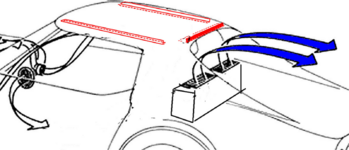
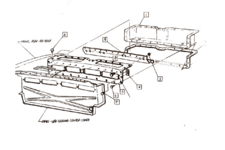
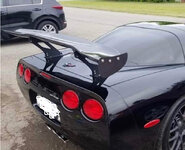
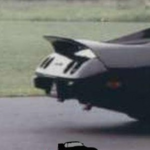
For a wing, you could place a wing between the flying butresses so it just reaches above the roofline. You could create a slot effect, which in combination with any deck augmented flow could be very useful. This would be a much bigger effort and really experimental. Something on this order - but envision it mounted forward and higher up:
Cheers - Jim