Hood venting

VetteMod - Corvette Restoration, Modding & Performance Forum

Help Support VetteMod Forum:

69427

The Artist formerly known as Turbo84
Joined
Mar 30, 2008
Messages
3,080
Reaction score
42
City & State/Province
Clinging to my guns and religion in KCMO.
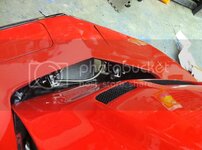
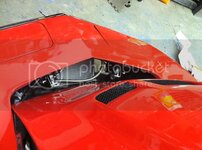
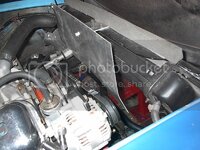
I liked what Chris (vette427sbc) did on his hood vent, opening up the area above the radiator on his L88 hood. I'm thinking on doing something similar, right after I round up a little more courage to cut into the fiberglass. In the mean time I'm welding up a piece to deflect a portion of the radiator exit air (there's obviously not enough hood opening space to try to exhaust all of the radiator air out the hood). This picture is during the fitment process. I've since welded up some reinforcements to it, as I'm not sure what the air/wind force against this piece is going to be.
IM002425_zps7459946a.jpg

Haven't decided whether to bend the panels in a vee shape to follow the contour of the scoop, or to leave it straight and just let the hot air dump into the first bulge in front of the vent slots.
 
Last edited:
Like this (XP819) hood?

126953de153372a7a.jpg


Could be useful.
Cheers - Jim
Ahhh - had to do some more sleuthing to find your reference:
126953de18c079cbe.jpg
 
Last edited:
If it is not a sealed duct it may not flow out too well. If the under car pressure is lower it may want to flow down.
 
This is a topic dear to my heart. My 81 and I spent three years doing high speed 40 mile jaunts across the Mojave desert. We did a lot of thinking about cooling and airflow during the summer months and the GM guys had it mostly right the whole time. My Brit cars....not so much:smash:

The racer is where I started studying and experimenting with the underhood pressures as I was getting a lousy delta across the rad. decades later I do not overheat racing in the desert heat. So by extension, I maintain that no car should overheat if properly built. OK, That damned yellow Jag is still F..... with me but I think I know why:thankyou:

Point is, the engineers did it right to start with and if you're suffering now it's because the basics have been ignored. Clear the debris, explore the delta and ensure things are working as designed.....:mobeer:
 
This is a topic dear to my heart. My 81 and I spent three years doing high speed 40 mile jaunts across the Mojave desert. We did a lot of thinking about cooling and airflow during the summer months and the GM guys had it mostly right the whole time. My Brit cars....not so much:smash:

The racer is where I started studying and experimenting with the underhood pressures as I was getting a lousy delta across the rad. decades later I do not overheat racing in the desert heat. So by extension, I maintain that no car should overheat if properly built. OK, That damned yellow Jag is still F..... with me but I think I know why:thankyou:

Point is, the engineers did it right to start with and if you're suffering now it's because the basics have been ignored. Clear the debris, explore the delta and ensure things are working as designed.....:mobeer:

The engine doesn't overheat. Even with a 195 thermostat, 90+ degree track days, and the parking light grills blocked off. No basics have been ignored.
 
If it is not a sealed duct it may not flow out too well. If the under car pressure is lower it may want to flow down.

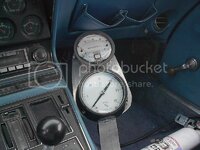
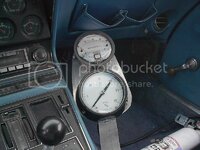
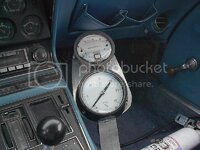
I agree. I've got a differential pressure gauge (the top smaller one) to measure the points under and over the hood.

IM002245_zpsa5452c7c.jpg

I'm planning on trying some tufts also to get a visual look at the airflow, but with the frontend shape of a C3 I honestly can't imagine it having less pressure (at speed) under the hood than on top of the hood.
 
As an Amazon Associate we earn from qualifying purchases. Product prices and availability are accurate as of the date/time indicated and are subject to change.
There ya go! The magnahelic tells the tale. Having that tuirned my racer around and it also confirmed the 81 was working right. Folks seem to tyhink the cooling is some kind of mag
If it is not a sealed duct it may not flow out too well. If the under car pressure is lower it may want to flow down.

I agree. I've got a differential pressure gauge (the top smaller one) to measure the points under and over the hood.

IM002245_zpsa5452c7c.jpg

I'm planning on trying some tufts also to get a visual look at the airflow, but with the frontend shape of a C3 I honestly can't imagine it having less pressure (at speed) under the hood than on top of the hood.
 
Nice set up.
I wonder how many of us "aero-kooks" have a Magnehelic Gauge?
[should we ask for a show of hands?]​

Just a few questions, if I may:
Are you using a multi-tube setup, and pulling "taps" or reset/retape after each run?
Have a recorder with you to take data?
Or, using a camera?

Just a few things I've been thinking about as I get closer.

Cheers - Jim
 
There ya go! The magnahelic tells the tale. Having that tuirned my racer around and it also confirmed the 81 was working right. Folks seem to tyhink the cooling is some kind of mag
If it is not a sealed duct it may not flow out too well. If the under car pressure is lower it may want to flow down.

I agree. I've got a differential pressure gauge (the top smaller one) to measure the points under and over the hood.

IM002245_zpsa5452c7c.jpg

I'm planning on trying some tufts also to get a visual look at the airflow, but with the frontend shape of a C3 I honestly can't imagine it having less pressure (at speed) under the hood than on top of the hood.

This isn't a cooling thread. This is an underbody pressure/lift (reduction) thread.
 
Nice set up.
I wonder how many of us "aero-kooks" have a Magnehelic Gauge?
[should we ask for a show of hands?]​

Just a few questions, if I may:
Are you using a multi-tube setup, and pulling "taps" or reset/retape after each run?
Have a recorder with you to take data?
Or, using a camera?

Just a few things I've been thinking about as I get closer.

Cheers - Jim

I'm just a one man, low budget operation. I've got a couple of ten foot lengths of tubing (plugged into the Magnehelic) that I move around and tape onto body locations or plug into pressure/vacuum taps. No data recorder or anything, I just take a glance at the gauge(s) during the long straights on test & tune track days. Would be nice to have a printout of pressure versus speed or RPM, but I'm happy to just get whatever info I can however I can.
 
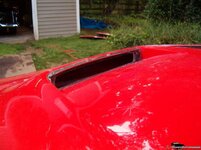
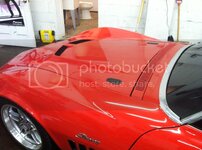
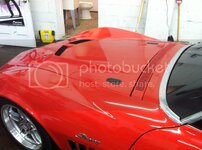
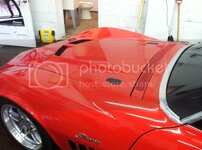
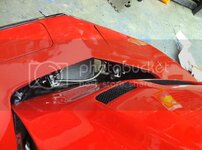
Just so were all on the same page here, this is my most recent cut to the hood vents:
FE7BD4A2-6A8F-48C8-B7C8-CAC27820FBC9_zpsxywtqxmt.jpg

43B14BD8-C4F5-4BFD-A7AC-36CD4042D678_zpsezqxnyod.jpg

B9A0A1EC-D0C4-45CC-9CC7-CB22D209F1C5_zps8cyejsdx.jpg

While my first cut that Jim pictured in post #2 probably had a greater low pressure zone at the vent, the newer opening should allow for more airflow, but likely has no low pressure zone.
 
Just so were all on the same page here, this is my most recent cut to the hood vents:
FE7BD4A2-6A8F-48C8-B7C8-CAC27820FBC9_zpsxywtqxmt.jpg

43B14BD8-C4F5-4BFD-A7AC-36CD4042D678_zpsezqxnyod.jpg

B9A0A1EC-D0C4-45CC-9CC7-CB22D209F1C5_zps8cyejsdx.jpg

While my first cut that Jim pictured in post #2 probably had a greater low pressure zone at the vent, the newer opening should allow for more airflow, but likely has no low pressure zone.

I like the design of the screen. What is it, and how are you attaching it?
 
B9A0A1EC-D0C4-45CC-9CC7-CB22D209F1C5_zps8cyejsdx.jpg

While my first cut that Jim pictured in post #2 probably had a greater low pressure zone at the vent, the newer opening should allow for more airflow, but likely has no low pressure zone.

Looks good.
 
so does the tube connect to the gauge at both ends and then as it gets squeezed produce a movement on the meter? I guess I have to do some reading up on this it sounds interesting.


Nice set up.
I wonder how many of us "aero-kooks" have a Magnehelic Gauge?
[should we ask for a show of hands?]​

Just a few questions, if I may:
Are you using a multi-tube setup, and pulling "taps" or reset/retape after each run?
Have a recorder with you to take data?
Or, using a camera?

Just a few things I've been thinking about as I get closer.

Cheers - Jim

I'm just a one man, low budget operation. I've got a couple of ten foot lengths of tubing (plugged into the Magnehelic) that I move around and tape onto body locations or plug into pressure/vacuum taps. No data recorder or anything, I just take a glance at the gauge(s) during the long straights on test & tune track days. Would be nice to have a printout of pressure versus speed or RPM, but I'm happy to just get whatever info I can however I can.
 
so does the tube connect to the gauge at both ends and then as it gets squeezed produce a movement on the meter? I guess I have to do some reading up on this it sounds interesting.
............................

I'm not sure I understand your question (but I'll throw out a response). The Magnehelic gauge is a differential pressure gauge. It just gives you a reading of the difference in pressure between the two ports in the back of the gauge. I hook up a couple hoses to the two ports (and say, tape one hose to the top of the hood, and the other hose to the bottom of the hood)and I can then measure the difference in air pressure between the top and bottom surface of the hood. I can also do this to check the pressure drop across an air filter, or the pressure drop across the carburetor at WOT, or any of a number of other things.
If you leave one gauge port open (to atmospheric pressure), then the gauge just acts like a common gauge where the reading is gauge pressure (as opposed to differential pressure or absolute pressure).
 
Here is another question, if I may:
Are you using/getting full swing on the 4.0 gauge- or way less? Haven't tried mine yet - its a 1.0 full scale.

I note there are a lot of digital versions on eBay for about 30 bucks. Some with data hold. Could be nice for a one man operation - or use a "voice" recorder to "announce your data". I'm sure Pappy will recall that "method."

I'm just a one man, low budget operation. I've got a couple of ten foot lengths of tubing (plugged into the Magnehelic) that I move around and tape onto body locations or plug into pressure/vacuum taps. No data recorder or anything, I just take a glance at the gauge(s) during the long straights on test & tune track days. Would be nice to have a printout of pressure versus speed or RPM, but I'm happy to just get whatever info I can however I can.

BTW - I've added a few more of Simon McBeath articles in the Chassis/Suspension Downloads section for those interested. These are from "Aerobytes" in Racecar Engineering. More to follow.

Cheers - Jim
 
Magnahelic gauges

Quick point on your Magnahelic; these gauges are designed to operate in the vertical position. With yours in the passenger footwell at nearly horizontal the operation and calibration may be affected.
Very good gauges though. Being a pesky European, I like mine in Pascals.
 
Quick point on your Magnahelic; these gauges are designed to operate in the vertical position. With yours in the passenger footwell at nearly horizontal the operation and calibration may be affected.
Very good gauges though. Being a pesky European, I like mine in Pascals.

Thanks for the advice. I greatly appreciate it. :thumbs: I had it angled so that I could see it while I was driving, but I'll make a change to the bracket.

In most of my career I was using Pascals (kPa) for engine test load points and calibrations, but now that I'm retired, for some reason, I tend to gravitate towards the old English and American units of measure.
 
Here is another question, if I may:
Are you using/getting full swing on the 4.0 gauge- or way less? Haven't tried mine yet - its a 1.0 full scale.

I note there are a lot of digital versions on eBay for about 30 bucks. Some with data hold. Could be nice for a one man operation - or use a "voice" recorder to "announce your data". I'm sure Pappy will recall that "method."

I'm just a one man, low budget operation. I've got a couple of ten foot lengths of tubing (plugged into the Magnehelic) that I move around and tape onto body locations or plug into pressure/vacuum taps. No data recorder or anything, I just take a glance at the gauge(s) during the long straights on test & tune track days. Would be nice to have a printout of pressure versus speed or RPM, but I'm happy to just get whatever info I can however I can.

BTW - I've added a few more of Simon McBeath articles in the Chassis/Suspension Downloads section for those interested. These are from "Aerobytes" in Racecar Engineering. More to follow.

Cheers - Jim

This Magnelic gauge is a 0-40 inches H2O (about 1.5 psi). Measuring different exhaust system backpressures will move the dial significantly, while measuring air filter pressure drops don't cause much movement at all. I still need to measure my carb pressure drop at WOT to see what numbers I get.

I gotta check out those digital meters you mentioned. They sound rather interesting. :thumbs:
 
I have a Dwyer that's pretty affordable. It's cool but I trust a Magahelic more. Maybe it's just an analog brain...

I never noticed a difference in the orientation of the gauge but I never looked for it either. It's a good observation to look out for. I'm an instrument guy and my life is "I measure things", I'll watch the Magnahelics in the future....Thanx
 
some future planning for me is to add a splitter with an air dam,

I am using an LM1 to log multiple tuning points so I've thought of adding a couple MAP sensors to log pressures at different points up front.

Not sure if it will work but going to give it a try some day,

Neal :thumbs:
 
69427- when you were working on the front grill openings, what ever happened? what did you end up doing. the idea of closing off the bottom & the right & left sides sounds like the right step, I was thinking of making a duct or ? to channel the air from the lic. plate grill to the rad. then air can not go anywere else. I did not know if this was something you already tried?

I have a 69 vette (blk on blk) that we are rebuilding the engine (70 ls6)
and like you I do not want to change the looks of the car. this is the best looking car chevy has ever made and changing the body would be a crime.

I have the big block hood and was also looking into opening up the fake grill
seems like anything would help. Now are we trying to get the air leaving the rad. to go out of the hood? could this be done by mod. the rad shroud?
 
Last edited:
69427- when you were working on the front grill openings, what ever happened? what did you end up doing. the idea of closing off the bottom & the right & left sides sounds like the right step, I was thinking of making a duct or ? to channel the air from the lic. plate grill to the rad. then air can not go anywere else. I did not know if this was something you already tried? I've just been trying to block out "excess" air (which I crudely define as any additional air entering the grills that isn't necessary to keep the radiator/coolant temp from getting hotter than I like) to minimize the amount of air trapped under the hood and that gets channeled under the floor. I've got both the side grills blocked off (with black plastic panels behind the grills), and the center grill about 70% covered (it's an odd, recessed shape, and 70% is about all I can do right now without spending a bunch of time fabricating a complex shape). I've also gotten the two under-grill openings about 50% blocked off. So far no cooling issues. I'm still trying to figure out which is better, taking in all the air from the center grill or taking it from the two under-grill openings.

I have a 69 vette (blk on blk) that we are rebuilding the engine (70 ls6)
and like you I do not want to change the looks of the car. this is the best looking car chevy has ever made and changing the body would be a crime. Yeah, I like the stock styling, and my thoughts have always been if a car starts looking too much like a race car it better have the speed to back up the looks when you're sharing the track with stock looking vehicles.

I have the big block hood and was also looking into opening up the fake grill
seems like anything would help. Now are we trying to get the air leaving the rad. to go out of the hood? could this be done by mod. the rad shroud?

It's been a crappy, busy summer for me, so I'm a bit behind schedule, but opening up the hood is on the schedule. It's a slight efficiency problem as the shroud and the hood dip are not in ideal positions relative to each other. I've currently got the shroud out and got an air deflector fabricated to direct the air from the upper portion of the radiator up to the hood opening (which I haven't got cut out yet). The rest of the air is going to have to exit out the louvers, wheel wells, or under the car.
 
I saw this on the Duntov site. Makes sense, should work. Probably not something you would add if you want stock appearance.


Front Fender Louver Package

Where allowed, these louvers are just the ticket. Quoting from the SVRA General Rules and Regulations, Section 3, Vehicle Preparation, Sub Section K. General, Paragraph 4: "Louvers may be added for engine cooling." They not only aid cooling, they also add a margin of safety by helping keep the front end planted at high speeds. The louvers are carbon fiber and need to be installed using glass mat and epoxy resin, which we can supply. The louvers mount up and into the wind stream, and are open at the back. This aids evacuation of hot air from the engine compartment. The panels are flexible and can be formed to fit on the hood, fender or roof if you want air conditioning. Approx size: 20 X 8 inches. Weight: Close to nothing.
 
I installed louver grills from a 65 BB. GM installed them on the side of the hood bulge. I installed them on the flat horizontal area next to the L-88 scoop. Homemade water deflectors attach to the valve covers below. I haven't tested yet as I just did the rough install last week.
 
Just so were all on the same page here, this is my most recent cut to the hood vents:
FE7BD4A2-6A8F-48C8-B7C8-CAC27820FBC9_zpsxywtqxmt.jpg


While my first cut that Jim pictured in post #2 probably had a greater low pressure zone at the vent, the newer opening should allow for more airflow, but likely has no low pressure zone.

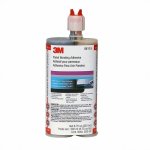
I found some similar screen for my car, and am hoping to get around to installing it this summer, but I don't recall receiving a reply regarding what type of adhesive vette427sbc used. I haven't seen him post recently, so does anyone here on the forum have suggestions on what adhesives might do well for this task?

Thanks.
 
Back
Top