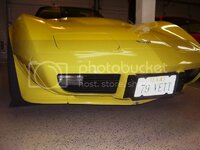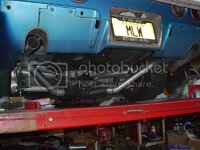
C3 front end lift (aero) question.

VetteMod - Corvette Restoration, Modding & Performance Forum

Help Support VetteMod Forum:

I believe the lift everyone is discussing is that the slant and the size of the panel around the radiator. This panel is the one that directs all the incoming air into the radiator but as others had tested. Very little air gets to the back of the top of the hood. My C4 has ductwork to the radiator and air inlet that only draws air from the center of the bumper from underneath. I would think the true repair for this issue would be to make a duct to draw air into the radiator from a much smaller surface area of the nose of the car. Then block off air flow into the area in front of the wheels so the air doesn't get trapped and create a high pressure area in the nose. Better yet vent the air on either side of the radiator into the brakes and underhood so that air would be put to use cooling the brakes and engine compartment.
I like the Front Spoiler-splitter idea because that increases front air pressure downward. Don't forget that Grand Sports cut openings in the top of the fenders to let that air out quickly to help plant the front ends.
I think I am going to do this to my car if for no other reason to improve engine compartment and front brake temps.

I have only a Gen2 SB, roller engine <400 hp....and so have a F body radiator to fit the OEM '72 supports...and so that rad SHOULD be enough to cool the engine, I would suppose, but yet with the front tag mounted and in FLORIDA heat on the freeway it got hot...obviously something about airflow at speed, I pulled the front tag and mounting, cured THAT aspect of the problem....finally doing Dual Spals cured other slo hot traffic aspects....

so IMO, releiving pressure in front of the rad, would lessen flow through the rad, NO?? if so...it's the same a block it in the first place, I would assume??

so the fans would turn on sooner for sure, but on a long drive would they be enough to compensate for the lack of pressure/flow directed to just the rad area??

:stirpot:
 
Should be enough

The airflow, if directed straight into the rad should produce the same if not more airflow. The issue is that a lot of area is a deadend for air and therefore really doesn't do as good a job of cooling since it causes turbulance that a directed airflow would do. If it works well on my C4 why not a C3? I live in WI so cooling is less of an issue but there must be a lot of C4 owners with 383's who don't have cooling issues. I just went though a 2 mile parade and got as high as 227 degrees which was pretty good since it was in the upper 80's today. I was on the open road 4 miles and I was 197 degrees. I think that is good. I have heard many Shark owners complain of poor under hood cooling and high heat sink. So this may help.
Just an idea
-Charlie
 
I have spent a few years workin with the air flow on my vette.It passes air through very well now.At first I was working to draw more air into the rad,and engine compartment.Due to modding(lowering)the front of the hood.
I found that it was not drawing enough air into the rad,I addressed that issue and was lifting the back of the front clip and bowing the clip at 60mph on the pins.(If I pulled the keepers on the pins it would raise @ 4" at 55 to 60mph) It was drawing in enough air but it had nowhere to escape,I added louvers and raised the cowl area of the hood to let it escape and it works very well.
No coolin problems or underhood heat.I will still be modding the side vents since I added turbos but it is working very well.

Showtime010.jpg

I know that alot of this does not apply to the stock fronts but for every action there is a reaction. Most vettes could use more air passin through,but it must be let out to be effective.The Boys at GM spent alot of time addressing this.They made a few changes through the years.(They did'nt have much room to work with.)As stock vettes go,Small changes can make a big differance.(Seals,shrouds,spoilers,ect.)As for down force of the stock front.I do remember that they had to change the front of the Mako shark II,(Prototype)for the production C-3 vette.The front fenders were too drastic and made it feel unstable at higher speeds.(I believe the tall humps were creating lift.)It's been awhile since I read it,so please don't quote me on it but Thats what I remember.
 
Last edited:
I have spent a few years workin with the air flow on my vette.It passes air through very well now.At first I was working to draw more air into the rad,and engine compartment.Due to modding(lowering)the front of the hood.
I found that it was not drawing enough air into the rad,I addressed that issue and was lifting the back of the front clip and bowing the clip at 60mph on the pins.(If I pulled the keepers on the pins it would raise @ 4" at 55 to 60mph) It was drawing in enough air but it had nowhere to escape,I added louvers and raised the cowl area of the hood to let it escape and it works very well.
No coolin problems or underhood heat.I will still be modding the side vents since I added turbos but it is working very well.

I know that alot of this does not apply to the stock fronts but for every action there is a reaction. Most vettes could use more air passin through,but it must be let out to be effective.The Boys at GM spent alot of time addressing this.They made a few changes through the years.(They did'nt have much room to work with.)As stock vettes go,Small changes can make a big differance.(Seals,shrouds,spoilers,ect.)As for down force of the stock front.I do remember that they had to change the front of the Mako shark II,(Prototype)for the production C-3 vette.The front fenders were too drastic and made it feel unstable at higher speeds.(I believe the tall humps were creating lift.)It's been awhile since I read it,so please don't quote me on it but Thats what I remember.

I agree. When I bought my 71 stock small block it had no catches on the hood. At hiway speed the hood would lift at the windshield about an inch at 65, and another inch by 80mph. In my mind it was as simple as more air in the front and under the bottom than could be exhausted thru the side vents or under the firewall and out the back. When designing my overall body mods I did several things (none yet tested) to counter this. First was limiting the flow under the front. I used the F Gregg spoiler, but added a flange to the lower leading edge. This flange stiffens it while reducing forward ground clearance by 3/4", but also will support a plastic sweep spoiler if needed down the road. Part of the F Gregg also feeds brake coolers, the amount of air diverted to that will be determined by radiator cooling needs after testing. The original ports in the valance can be throttled to suit then fixed. That combo should solve the control issue of how much air is directed to the engine bay. The next consideration was exhausting the air. My thought was to maximize the use of the side exhaust vents. I was never too thrilled with the looks of the eggcrates and they are heavy. Looking at the later C3's all the flow is restricted by the size of the single vent opening in the fender. It is really noticably less open than say the 68 and the 69. The easy answer was to install 69 gills, but easy was never a goal. :) I liked the look of the Motion cars, so I bought 69 fender pieces and installed the inside out. Hopefully the combination of things will reduce air pressure under the hood and lift under the car. Cowl is sealed and intake air is ram through the hood but sealed from the engine bay.
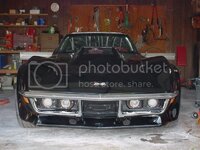
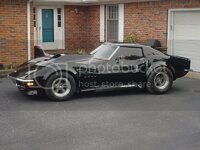
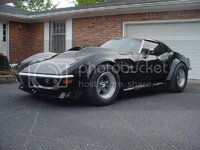
Dave


DSC08509.jpg

DSC08580.jpg

DSC08576.jpg

DSC08610.jpg

DSC08546.jpg
 

I agree. When I bought my 71 stock small block it had no catches on the hood. At hiway speed the hood would lift at the windshield about an inch at 65, and another inch by 80mph. In my mind it was as simple as more air in the front and under the bottom than could be exhausted thru the side vents or under the firewall and out the back.


My '72 is a basically stock machine, with fixed headlights in smaller openings but basically stock location, the grill is changed but little improvement there is any, and the side gills were opened up a tad by p/owner but each opening is only 7.5"x2.5" , I would say on the small side, really.....

some time ago I did a yarn test on my hood rear opening, aftermarket BB style hood, open in rear, center of hood cut out under the bulge...and got INFLOWing air, not coming out, I layed a piece of yarn over the rear edge, it was totally still, there is no gasket seal, never was since I got it....

I still feel that any lift coming on my front end is not from the hood....EXCEPT forward of the radiator...dont ask
...:flash:


When designing my overall body mods I did several things (none yet tested) to counter this. First was limiting the flow under the front. I used the F Gregg spoiler, but added a flange to the lower leading edge. This flange stiffens it while reducing forward ground clearance by 3/4", but also will support a plastic sweep spoiler if needed down the road. Part of the F Gregg also feeds brake coolers, the amount of air diverted to that will be determined by radiator cooling needs after testing. The original ports in the valance can be throttled to suit then fixed. That combo should solve the control issue of how much air is directed to the engine bay. The next consideration was exhausting the air. My thought was to maximize the use of the side exhaust vents. I was never too thrilled with the looks of the eggcrates and they are heavy. Looking at the later C3's all the flow is restricted by the size of the single vent opening in the fender. It is really noticably less open than say the 68 and the 69. The easy answer was to install 69 gills, but easy was never a goal. :) I liked the look of the Motion cars, so I bought 69 fender pieces and installed the inside out. Hopefully the combination of things will reduce air pressure under the hood and lift under the car. Cowl is sealed and intake air is ram through the hood but sealed from the engine bay.
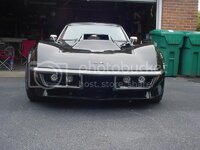
Dave


DSC08610.jpg


Sweet ride there man....with I had your talent with glass work....I too am looking at that F Gregg spoiler, maybe this winter....


:D
 
As many of you already know, I had mine up to 185mph. After some tweaking, I hope to expand on that but I think that might be about as fast as it will go. The C3 is not exactly aerodynamic.
 
As an Amazon Associate we earn from qualifying purchases. Product prices and availability are accurate as of the date/time indicated and are subject to change.
As many of you already know, I had mine up to 185mph. After some tweaking, I hope to expand on that but I think that might be about as fast as it will go. The C3 is not exactly aerodynamic.

Dash instrumentation? or Garmin.....???

unless it's a measured mile that is totally known for accuracy of markers....I don't even trust the stopwatch....
 
As many of you already know, I had mine up to 185mph. After some tweaking, I hope to expand on that but I think that might be about as fast as it will go. The C3 is not exactly aerodynamic.

Dash instrumentation? or Garmin.....???

unless it's a measured mile that is totally known for accuracy of markers....I don't even trust the stopwatch....

Dash instrumentation, further confirmed by calculation of trees passed per second. A hero like myself knows 185 like you know 20mph.
 
......further confirmed by calculation of trees passed per second. A hero like myself knows 185 like you know 20mph.

:rofl::rofl::thumbs:

Phone poles and a picket fence......

:goodnight::bonkers::rofl:

Sorry man, I got embarrased and pissed at what I wuld have SWORN was correct via the instruments, tach and speedo , and having calibrated the tach myself, and then using those tables with the tire size/rpm/ratios and ****....and supposedly I was doing 150 mph....

then a bought a GARMIN, which is what I believe......

and NO it makes NO sense to me either....I got other fish frying now....I get to it when I do....

I STLL dying to know WTF....but have NO clue....something was rotten for sure, and so HOW?? is my Unanswered question....

:hi::bonkers::cry:
 

I agree. When I bought my 71 stock small block it had no catches on the hood. At hiway speed the hood would lift at the windshield about an inch at 65, and another inch by 80mph. In my mind it was as simple as more air in the front and under the bottom than could be exhausted thru the side vents or under the firewall and out the back.


My '72 is a basically stock machine, with fixed headlights in smaller openings but basically stock location, the grill is changed but little improvement there is any, and the side gills were opened up a tad by p/owner but each opening is only 7.5"x2.5" , I would say on the small side, really.....

some time ago I did a yarn test on my hood rear opening, aftermarket BB style hood, open in rear, center of hood cut out under the bulge...and got INFLOWing air, not coming out, I layed a piece of yarn over the rear edge, it was totally still, there is no gasket seal, never was since I got it....

I still feel that any lift coming on my front end is not from the hood....EXCEPT forward of the radiator...dont ask
...:flash:


When designing my overall body mods I did several things (none yet tested) to counter this. First was limiting the flow under the front. I used the F Gregg spoiler, but added a flange to the lower leading edge. This flange stiffens it while reducing forward ground clearance by 3/4", but also will support a plastic sweep spoiler if needed down the road. Part of the F Gregg also feeds brake coolers, the amount of air diverted to that will be determined by radiator cooling needs after testing. The original ports in the valance can be throttled to suit then fixed. That combo should solve the control issue of how much air is directed to the engine bay. The next consideration was exhausting the air. My thought was to maximize the use of the side exhaust vents. I was never too thrilled with the looks of the eggcrates and they are heavy. Looking at the later C3's all the flow is restricted by the size of the single vent opening in the fender. It is really noticably less open than say the 68 and the 69. The easy answer was to install 69 gills, but easy was never a goal. :) I liked the look of the Motion cars, so I bought 69 fender pieces and installed the inside out. Hopefully the combination of things will reduce air pressure under the hood and lift under the car. Cowl is sealed and intake air is ram through the hood but sealed from the engine bay.
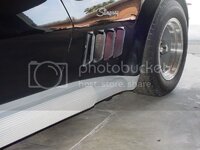
Dave


DSC08610.jpg


Sweet ride there man....with I had your talent with glass work....I too am looking at that F Gregg spoiler, maybe this winter....


:D

I love the look of your vette.It reminds me of a motion stage III.I loved them too!:thumbs:

I have no inner fenders so it made a big differance there too.I know that alot of air is still hitting the firewall and being pushed under the car.Thats why I still want to mod the side vents on Hammerhead.My egg crates were changed with inserts along time ago.I'm going to build my own functional side vents.I will possibly build aluminum panels to guide the air fow through and out.It depends on the room after I fab the new turbo headers for the LS and get them plumbed and inplace.
 
Last edited:
Reducing front air intake.

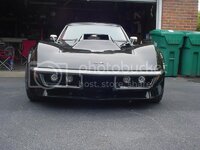
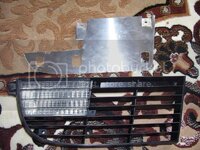
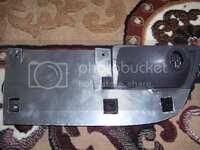
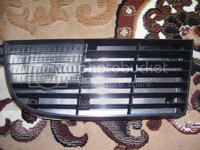
Had an hour to kill so I finally got around to starting to block off the front grills. I've had a few engines (3) in this car, and never had much of an overheating problem. Currently I'm running a 195* thermostat with a DeWitt radiator, and no issues. My main focus here is a bit less front end lift on track days by reducing the amount of air getting into the pre-radiator plenum. I still have the center area open (no license plate) and the two lower areas above the spoiler. Hopefully these will supply enough air for cooling, while the majority of air that hits the L&R front grills will be routed to the sides of the car. Here's the start of the blocking inserts.

IM001596.jpg

This is some sheet vinyl that is easy to cut, and once I'm done I'll paint it some shade of black that will (hopefully) be invisible behind the grills (I want the front to look unmodified). I'm still cutting on it for fit, with the primary challenge being a tight fit around the parking lights.
Additionally I still want to fabricate a manometer to make some measurements of the pressures in the plenum and the wheelwell areas.
 
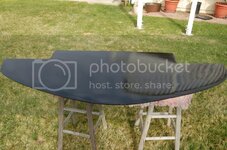
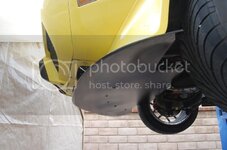
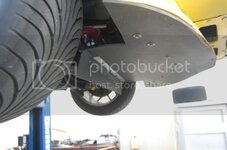
I built a front splitter using luan plywood and fiberglass sheet and resin. I still plan to vent my hood when I can find some nice vents.
Bee Jay
Corvette634.jpg
Corvette635.jpg
Corvette636.jpg
Corvette497-1.jpg
Corvette009.jpg
 
Last edited:
I did try the grill block off plates a while ago. At the time, my car needed all the cooling air I could get, so I took them out. Now that I'm running really cool, maybe I should try it again.
Bee Jay
100_1421.jpg
100_1422.jpg
100_1423.jpg
100_1429.jpg
 
most effective way is to lay the radiator the other way around and use a heat extractor type hood. the scoop and ramp will give downforce and the air is funneled out instead of creating a high pressure area under the hood
 
most effective way is to lay the radiator the other way around and use a heat extractor type hood. the scoop and ramp will give downforce and the air is funneled out instead of creating a high pressure area under the hood

I still say the only area of the hood that has any pressure/lift to it is in front triangle before the hinges/top of radiator.....not after....
seems to me that my car is not all that modified to change that type airflow patterns....

but I do think angling the rad area to front forward would improve things a bit...just that it's a hell of an experiment for me, so would like some input on how a success was done on that....

:surrender:
 
most effective way is to lay the radiator the other way around and use a heat extractor type hood. the scoop and ramp will give downforce and the air is funneled out instead of creating a high pressure area under the hood

From a purely technical (and clean sheet of paper) perspective I absolutely agree with you. (However I do wonder how the hood would still be able to pivot to open, unless the radiator was layed at an extreme angle, but then issues of forward movement of the radiator and water c/g (at 30-40 pounds of mass) during this change come into play.) In my particular case I'm just trying to improve the aero qualities of the car without these changes being noticed by the casual observer. (I like the stock look, I just don't like the stock performance. And, once the car starts looking like a race car you're pretty much resigned to either being the fastest car at the track or looking like a poser.) My car is quick, but I've only had two overall FTD trophies in the whole time I've been running this car. The rest of the time I'm back in the pack somewhere, and it's getting harder and harder to compete with newer Corvettes that have a whole engineering team working on them, rather than just one (moi).
 
Last edited:
Got the right side grill blockoff finished and painted (semi-gloss black) and installed in the car. Lucked out, as it's pretty much invisible. The left side ought to go a little quicker now that I know the routine.

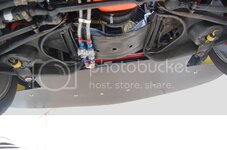
After the radiator aluminum support bracket project is finished I'm going to try to copy much of the front horizontal undertray that BeeJay has. (Don't anyone tell him, as I don't want to have to pay any royalties. :wink: )
 
At a Vette Set car show in the early 1980's (Champion Chevrolet, Manhattan Beach, Ca), Gale Banks brought his 1968 hardtop convertible that he used to set, at that time, the world's speed record for a stock bodied production car. Yep, it was a stock bodied 1968 Corvette hard top convertible. But underneath the stock body, it wasn't stock. Although I may be mistaken, I think the speed record he set was 220 mph. First of all the nose, with the stock little fiberglass chin spoilers was basically just at floor level. The nose was as low as it could go. I don't remember if he blocked off the grill works under the bumper, I kinda think not. The engine coolant radiator was gone. In it's place was a massive intercooler for the twin turbos. Because of the intercooler, I assume that he was getting an air feed through the front grill (under bumper) works. ...but what made this stock body really work, was a 50 gallon water tank built into the nose of the car (50 gallons = 400 pounds). I'm not sure, but I tend to think the front water reservoir may have been coupled to a radiator where the spare tire compartment is located. (It's been 30+ years so this may not be accurate.) The purpose of the 400 pound water weight was to keep the nose from lifting up at high speed.

An interesting data point, is that to go 220 mph with a stock bodied 68 Corvette, ~1200 hp was needed from the engine. I did talk to Gale Banks about many of the details of his car. He was using a twin turbo 427 engine. He said he set the boost to run 1200 hp, but he said he could have gotten more hp. He said he reduced boost pressure just to make sure the engine lived to set the record. Also, note that a 2011 650 hp ZR1 Corvette has a top speed of about 210 mph. For a 68 Corvette to go just 10 mph faster, it appears that approximately 550 HP extra is required!!!!!! I can accept notionally that this dramatic HP increase is realistic. For increases in aerodynamic drag as speed increases, power to overcome increases at a square (or third power?), As compared to a 2011 Corvette with the Gran Sport body (stock body option, Z06, ZR1), a 1968 Corvette needs a tremendous amount of extra horsepower since it's basic body aerodynamics are not that good.
...............................
I've edited the above. I originally quoted Bank's HP as 2100. When I originally wrote the article I did pause when I wrote 2100 HP. This is a lot of power to expect from a 427 for relatively long time duration high speed timing passes! It just dawned on me (the next day) that the HP was 1200 Hp. This is a lot more realistic. I originally recanted this Gale Banks story on CF a few years ago . Someone who knew a great deal more about these Bank's high speed runs later replied with a lot more detail. It's in their archives somewhere.
 
Last edited:
Got the right side grill blockoff finished and painted (semi-gloss black) and installed in the car. Lucked out, as it's pretty much invisible. The left side ought to go a little quicker now that I know the routine.

After the radiator aluminum support bracket project is finished I'm going to try to copy much of the front horizontal undertray that BeeJay has. (Don't anyone tell him, as I don't want to have to pay any royalties. :wink: )

Hey, I can hear you. No royalties, just help me design a rear tray. I really complicated that with my one muffler design. Two cars have copied that idea now. Maybe I should charge royalties.
Bee Jay
 
Hey, I can hear you. No royalties, just help me design a rear tray. I really complicated that with my one muffler design. Two cars have copied that idea now. Maybe I should charge royalties.
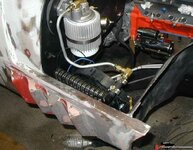
Bee Jay

I'm trying to decide what I do with mine. With the mufflers gone there's a lot of empty space back there now.

IM001586.jpg

I might put the spare (C4) tire tray in there for daily driving, but substitute some sort of other bodywork under there for track days. Once I get caught up with other stuff I'll have to do some measuring to see what might work. The hard part looks to be trying to control/manage the air that is bouncing around up high near the halfshaft level.
 
How about a sheet of 2024 aluminum about .025 thick? Run it forward to the crossmember at the back of the trans with slots for the springs. Bend the edges up as high as you can. That would get the air out of there and not add much weight. Roll some ribs into it for stiffness.
 
How about a sheet of 2024 aluminum about .025 thick? Run it forward to the crossmember at the back of the trans with slots for the springs. Bend the edges up as high as you can. That would get the air out of there and not add much weight. Roll some ribs into it for stiffness.

I think we're on the same wavelength, here. That's pretty close to what I was envisioning. (I was also looking at using some sheet aluminum for the front end between the spoiler and the A-arm crossmember to reduce a little bit of the turbulence down there.)
 
Before yesterday's track day at Topeka I made a couple quick blockoff plates out of some lexan scrap I had laying around. I put them in the two air inlets under the front grills. As the pieces were just a couple of rectangular shapes they only covered up about 70% of the openings. I thought this would be good enough for a test, and if they didn't work out (if the engine ran too hot) I could just remove them at the track. The ambient temperature yesterday was about 75*, quite comfortable, and the engine stayed below 210* the whole day. I currently have all three of the front grills blocked off, although the center grill is only about 75% sealed, allowing air to flow above the plastic grill area. I'm thinking over the winter of making some better shaped pieces to completely block off the lower openings (while leaving the center leakage area intact), and then just removing one or both if needed, or make the opening covers adjustable for use on hot days.

For what ever reason, this engine doesn't overheat easy. I don't know if it's because of the DeWitt radiator (a very nice piece), the block material more efficiently conducting the heat out of it, or maybe the engine just has a decent tune for the modest power it's making. I figure if I don't need great gobs of air to cool the engine I might as well reduce the air volume/mass that's having to work its way out of the engine compartment or from under the car.
 
Before yesterday's track day at Topeka I made a couple quick blockoff plates out of some lexan scrap I had laying around. I put them in the two air inlets under the front grills. As the pieces were just a couple of rectangular shapes they only covered up about 70% of the openings. I thought this would be good enough for a test, and if they didn't work out (if the engine ran too hot) I could just remove them at the track. The ambient temperature yesterday was about 75*, quite comfortable, and the engine stayed below 210* the whole day. I currently have all three of the front grills blocked off, although the center grill is only about 75% sealed, allowing air to flow above the plastic grill area. I'm thinking over the winter of making some better shaped pieces to completely block off the lower openings (while leaving the center leakage area intact), and then just removing one or both if needed, or make the opening covers adjustable for use on hot days.

For what ever reason, this engine doesn't overheat easy. I don't know if it's because of the DeWitt radiator (a very nice piece), the block material more efficiently conducting the heat out of it, or maybe the engine just has a decent tune for the modest power it's making. I figure if I don't need great gobs of air to cool the engine I might as well reduce the air volume/mass that's having to work its way out of the engine compartment or from under the car.

From everything I ever heard over the years, it's that DeWitts Radiator, them thing can cool a Peterbuilt....I have a '89? F body radiator in my car, because it fits the stock size mounts just fine, but it's only single 1.25" row thickness, aluminum/plastic tanks, stock ****....cools ok in Maryland, but here in Florida, I had to take the front tag BS off, it was there with a block off plate from my old '87 vette....removing all that made it much cooler on the street/freeways.....but that was the days I did not have the Dual Spal fans..just a C4 fan in the stock shroud....:clap:
 
the Gale Banks Sundowner Corvette was run in too many configurations to remember, but i know it went at least 280. pontiac came along with a 3rd gen trans am body and asked him if he would like to go 300 with his existing drivetrain, he built the car and put his power train out of the Sundowner into the Trans Am and it did indeed go 300. so for a while a 68 c3 corvette was the fastest stock bodied car in the world. i may be wrong but i think the Trans Am still holds the record today. a friend ( now deceased ) who was a retired engineer for chevrolet told me the later model c3 vettes were more
" clean " than the early cars f.y.i:D
 
The air inlets under the bumper left and right, has anyone put coolers laying flat, so the air coming in would go though the coolers. I don't like them in front of the radiator. any thoughts on this? (69 coupe)
 
The air inlets under the bumper left and right, has anyone put coolers laying flat, so the air coming in would go though the coolers. I don't like them in front of the radiator. any thoughts on this? (69 coupe)

Heat transfer is heat transfer. If that compartment is primarily flowing out through the rad, it is probably a wash.
 
The air inlets under the bumper left and right, has anyone put coolers laying flat, so the air coming in would go though the coolers. I don't like them in front of the radiator. any thoughts on this? (69 coupe)

If I understand your question about alternative cooler placement, I think this is a "natural" solution:


1269559e554f17698.jpg

Not mine - but I'm using this approach for oil and transmission coolers.
Also, it is a fairly "wasted" space, usually.

Cheers - Jim
 
now you would need the fan running all the time to get air flow thru the coolers, I don't think you naturally get a lot of air coming out of the side grills.
 
Back
Top